
Web and mobile · Software architecture
How I shared web and mobile content in Afet Hukuku and ZEMİN
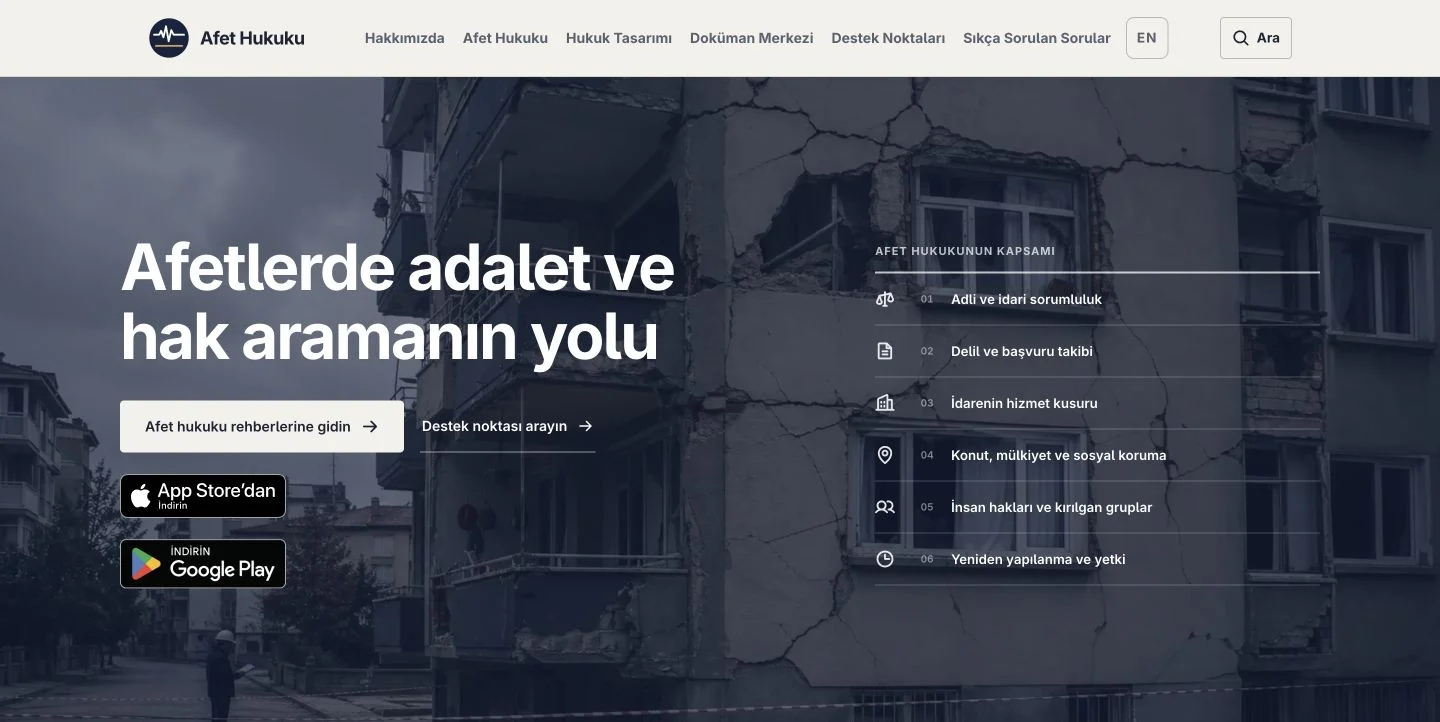
The Afet Hukuku website and the ZEMİN mobile apps provide the same guides, legislation links, and support locations. I built the web and mobile apps in a monorepo with shared packages so content changes could be made in one place.
Content lives outside the interface
I put topic guides, FAQs, document records, and support information for bar associations across all 81 provinces into a shared content package. The package has no React dependency, so Next.js and Expo can both use its data and helper functions. Updating the source for a guide or the details of a support location takes place in that shared layer.
Navigation fits each platform
The website uses topic pages with shareable URLs. The mobile app organizes tasks such as finding a guide, a document, or a support point into tabs. Shared data gives both interfaces the same context, while screen layout and navigation fit the phone or the browser.
Translations and design tokens are shared
Turkish and English text comes from shared message catalogs. Color, typography, and spacing values come from one design package. The web build generates CSS variables from that package, while mobile components use the values directly. A change to shared copy or a design token can be managed in one place.
Location is optional when finding support
People can find support points by province without granting location permission. When they choose to use location, the mobile app sorts nearby locations on the device. Both paths lead to the same information and keep the basic search available without location access.
I developed the web and mobile software for TÜBİTAK research project 323K124, coordinated by İnönü University. The links below lead to the published interfaces.